
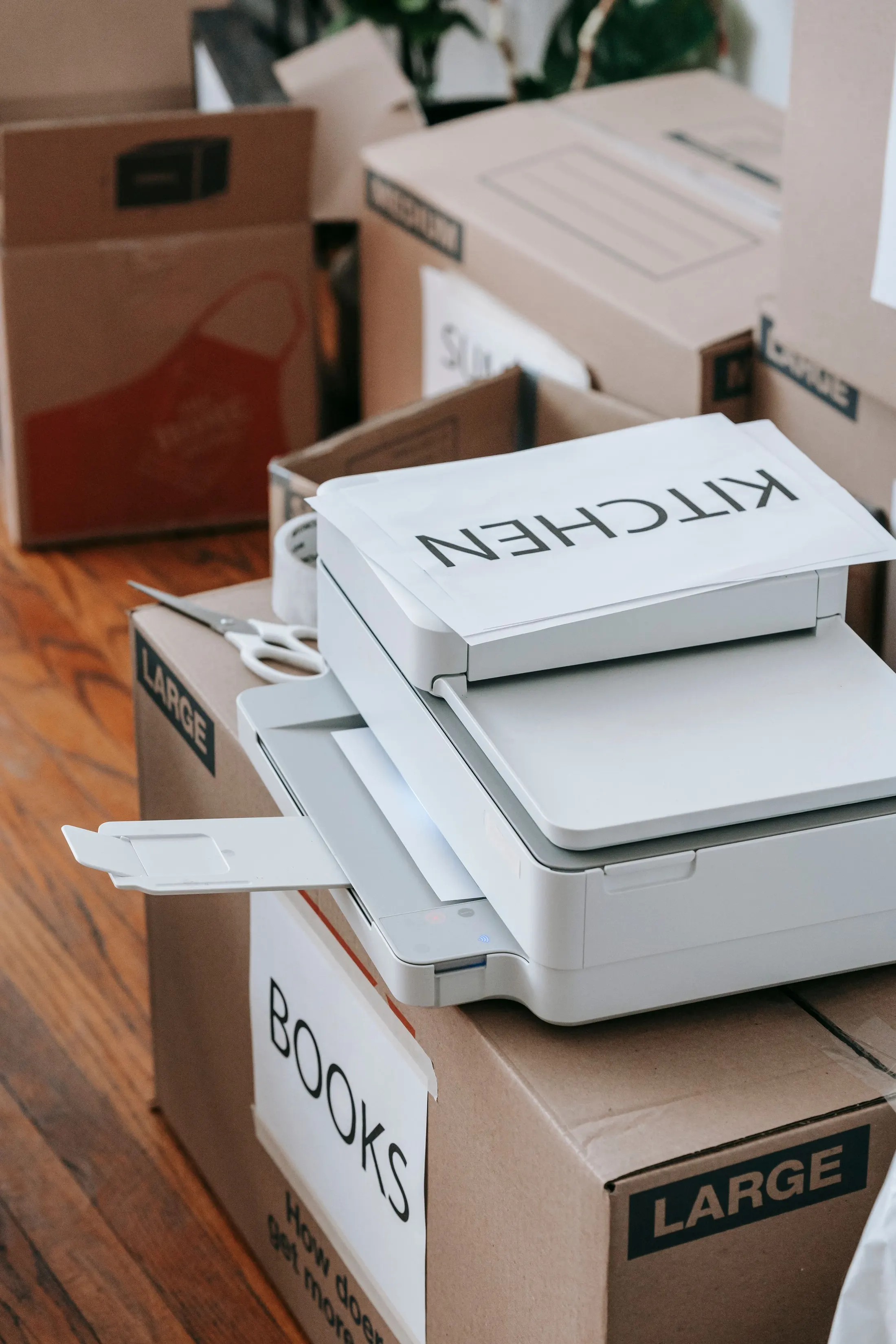
Unlike a home move, an office move has a hard stop: Monday morning. Everything the team needs to work must be in place before the first person walks in. Getting there is a scheduling problem more than a packing one.
Start with a survey, not a quote
Count workstations, meeting rooms, storage and any special equipment. A mover who has walked the floor can plan the vehicle, crew and sequence accurately — and the quote becomes a fixed scope instead of an estimate.
Agree the sequence
- Archive first. Files, old equipment and seasonal stock can move early.
- Non-essential furniture second. Desks and storage that nobody needs this week.
- IT last, and never on the same truck as general furniture. Servers and network equipment travel padded, upright and separately documented.
Label to the destination, not the source
Use a floor-plan code on every box and furniture item: building, floor, zone, workstation. Printed labels beat handwriting, and one shared spreadsheet beats everyone’s memory.
Communicate with the team early
Tell staff the date, what they are responsible for packing personally, what the movers will not touch (passwords, private devices, moving-boxes-with-valuables) and where to find their items in the new space.
Choose your window deliberately
A weekend move suits most offices. If your business runs seven days a week, a phased move over two or three evenings may cause less disruption than closing for a day.
The final walk-through
Before the old premises are handed back, walk both buildings with one checklist: everything delivered, nothing left behind, old space cleared and keys returned. Do it with the same person who signed the inventory.
Handle records and equipment deliberately
Paper archives and IT equipment are the two categories offices most often get wrong. Archives are heavy and confidential: pack them by year and department, label the boxes on two sides, and keep a destruction pile separate from the keep pile.
Servers, switches and workstations should travel upright, padded and documented by serial number. Back up before anything is unplugged, and photograph the cabling at the back of each desk so the rebuild does not become a puzzle.
Tell the team what to expect
Send one short message with the date, the arrival window, what each person must pack personally, what stays behind, and where to find their boxes in the new building. Repeat it the day before. Most “lost” items on an office move are in a colleague’s desk drawer, not on a truck.
Signage and access on day one
Order the new signage before the move, not after, and confirm when the building will allow it to be fitted. Arrange access cards, keys and parking for the first morning, and put a printed floor plan at the entrance so staff can find their zone without asking. A building that works on day one feels like a planned move; one that does not feels like an interruption.
The week after
- Confirm the old premises are cleared and the deposit or handover is settled.
- Update the address on invoices, licences, bank records and delivery accounts.
- Check signage, access cards and parking before staff arrive.
- Collect a short list of what is still missing, and close it out while the inventory is fresh.
If the move includes a change of floor or building, our office relocation service plans the sequence around your working hours, so the team arrives on Monday to a functioning office rather than a stack of boxes.