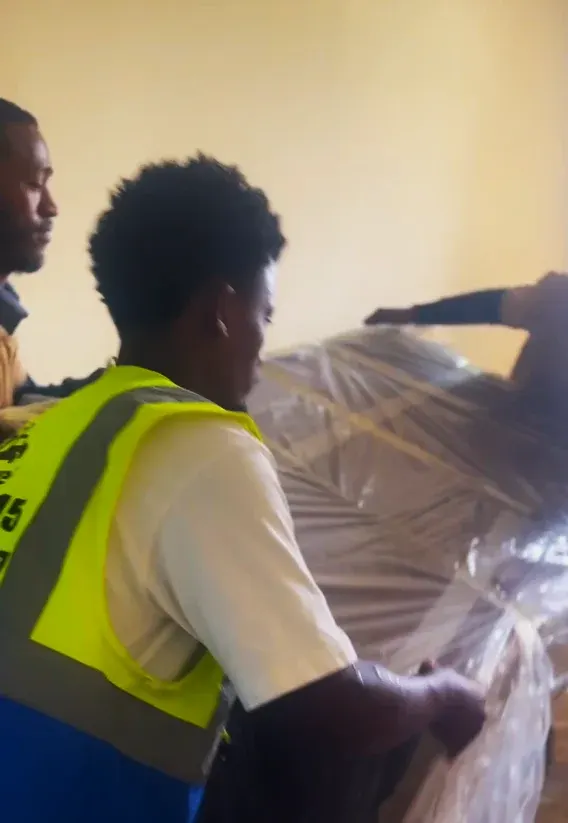

A good moving day looks uneventful from the outside. That calm comes from decisions made a week earlier — not from luck. Here is the sequence we recommend to every customer, based on hundreds of residential moves.
Seven days out
- Confirm the date, arrival window and crew size in writing with your mover.
- Book parking or lift access if your building needs it. This single detail causes more delays than any other.
- Start packing rooms you use least: store cupboards, guest rooms, seasonal clothing.
- Label every box with the destination room, not the origin room.
Three days out
- Defrost and empty the refrigerator; it must travel dry and upright.
- Drain washing machines and disconnect appliances that need it.
- Pack a “first night” bag for each person: clothes, medications, chargers, bedding, toiletries.
- Photograph the back of your TV, router and any other cabling you will reconnect later.
The day before
- Disassemble beds and large wardrobes, unless your mover has agreed to do it.
- Clear walkways, stairs and the loading area. Move anything fragile out of the traffic path.
- Charge your phone and keep a printed copy of the plan — you will not want to hunt for it.
Moving morning
Walk the crew through the property before loading begins. Point out anything delicate, anything staying behind, and where the vehicle can park. Then step back and let the plan do the work.
What to keep with you
Documents, cash, jewellery, keys, passports and medication should never enter a packing box. Keep them in one bag that stays with you from door to door.
If you would rather hand the whole checklist over, our full-service moves include packing, labelling and unpacking — the crew works from the same list.
Who does what on the day
Most friction on moving day comes from unclear ownership rather than heavy lifting. Agree the split before the crew arrives:
- You: documents, cash, jewellery, medication, house keys and anything you would not want a stranger to handle.
- The crew: dismantling agreed furniture, wrapping, loading order, securing the load and placing boxes in the labelled rooms.
- Both: the walk-through before loading and the inventory check at the other end.
Write it down in the quote. A one-line scope is the difference between “we assumed you were packing” and a smooth morning.
If your building has a lift
Book the lift in advance and confirm the time window in writing — this one detail causes more delays than traffic. Protect the cabin with a blanket or board, keep the doors from being propped open for long periods, and move the largest items first while the building is quiet.
Without a lift, plan for stairs: a wardrobe that takes four flights takes four times as long, and the crew size should reflect that. If you have not booked packing and unpacking, the same survey is the moment to ask how boxes will be staged for the carry.
The first hour in the new home
Before the truck is unloaded, walk the new property and decide where each labelled room’s boxes go. Mark the doors with the room names so the crew can place boxes without asking. Then check the essentials box, set up the beds and the kitchen kettle, and leave the rest for tomorrow. A move is finished when you can sleep there, not when every box is empty.
A short debrief
Note anything that went wrong while it is fresh — a door that needed removing, a parking restriction, a box that arrived damaged. It makes the next move easier, and it is the feedback a good mover wants.