Furniture is the heaviest, most awkward and most expensive thing in most homes, and it is where moving damage concentrates. The good news is that almost all of it is preventable with three habits: measure the route, protect the surfaces, and never lift alone what needs two people.
Measure the route, not just the room
A sofa that fits the living room can still fail at the front door. Walk the full path from its current position to the truck and write down the tightest point.
- Doorway width and height, with the door open and the handle removed if possible.
- Stair turns — the diagonal depth of a stairwell often decides whether a wardrobe travels upright or not at all.
- Lift dimensions, including the door opening rather than the cabin.
- Ceiling height where you will tip a mattress or a tall cabinet.
If a piece genuinely cannot pass, it is better to know a week early than at the door with a crew waiting.
Empty everything first
Drawers, shelves and storage compartments come out before the piece moves. An empty wardrobe weighs far less and cannot spill its contents onto a staircase. Bag the fixings and tape them to the back of the piece — a small envelope of screws is the most commonly lost item on moving day.
Disassemble what was assembled
Beds, flat-pack wardrobes and dining tables are designed to come apart. Remove legs, rails and headboards, and keep the hardware with the part it belongs to. If the manufacturer supplied a diagram, photograph it before you start; reassembly is much faster with a reference.
Wrap before you lift
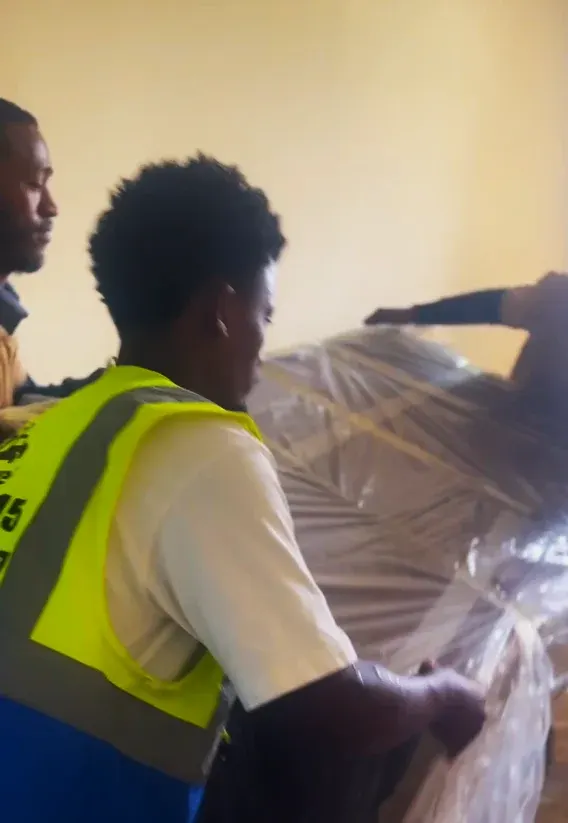
Moving blankets and stretch wrap do two jobs: they stop scratches and they stop doors and drawers opening mid-carry. Cardboard corners protect the parts that chip first. For upholstery, wrap firmly but not so tight that the fabric creases permanently.
Carry with a plan
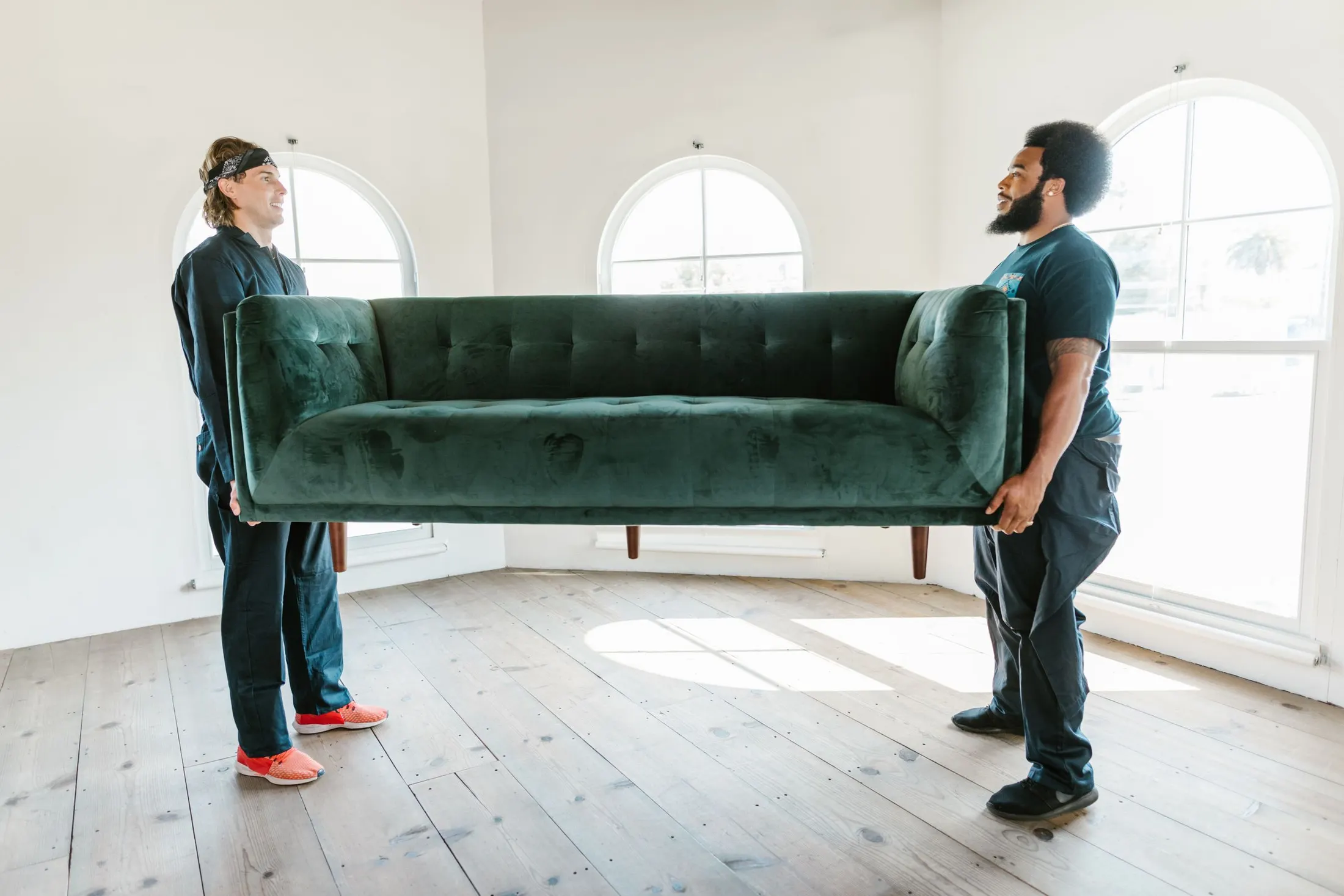
- Two people minimum for anything taller than a metre.
- Lift with the legs, keep the weight close to the body, and turn with the feet rather than the spine.
- One person calls the moves — “up”, “turn”, “down” — so nobody lifts at a different moment.
- Never drag furniture across a floor. A rug underneath is cheaper than a new floor.
Load in the right order
Heavy pieces go first, against the front of the load space and standing upright. Sofas and mattresses travel on their sides where the frame is strongest, strapped so they cannot slide. Nothing heavy goes on top of upholstery.
Reassemble in the right room
Put beds and wardrobes together before the boxes are opened, while there is still floor space to work. Check that everything is square and stable before you load it, and keep the spare fixings somewhere you will find them again.
Protect the route, not just the furniture
Floors, door frames and stair rails take as much damage as the pieces themselves. Lay a runner or flattened cardboard along the carry path, tape it down at the edges so nobody trips, and fit cardboard corners to the furniture before the first lift. Remove interior doors where the frame is tight instead of forcing a piece through, and check the top of the doorway: it is the corner people forget until a wardrobe catches it.
When to hand it to a crew
Pianos, safes, stone tops, glass-fronted units and anything that needs three people are worth professional handling — not because they are impossible, but because a mistake is expensive. Our furniture moving service covers dismantling, wrapping, carrying and reassembly, and if you would rather not pack the small items either, packing and unpacking can be added to the same job.