Fragile items rarely break because a box was dropped. They break because something inside the box was allowed to move. Professional packing is mostly about eliminating movement — and that is a technique anyone can learn.
Start with the right box
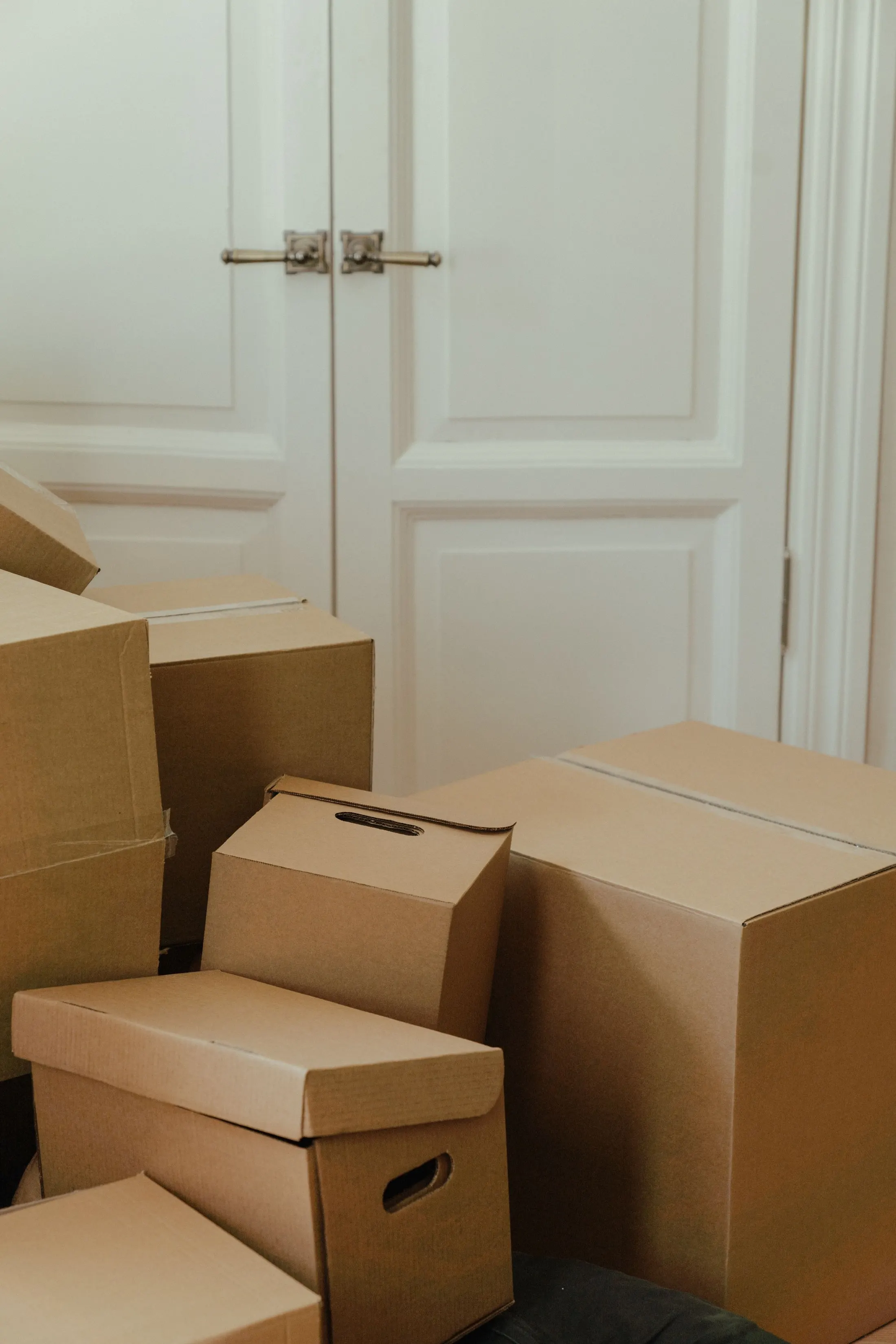
Use a small, heavy-duty carton for dense items such as plates and glassware. A large box filled with ceramics becomes too heavy to carry safely and is far more likely to fail at the corners.
Wrap, do not stack bare
- Wrap each item individually in paper or bubble wrap — two layers for anything with a handle or rim.
- Tape the wrap so it cannot unwind during transport.
- Stand plates and glasses upright rather than laying them flat. Upright edges are stronger than flat surfaces.
Build a cushion, then fill the gaps
Place two to three centimetres of crushed paper at the bottom of the box. Load the heaviest items first, then lighter ones on top. Fill every gap with paper so nothing shifts when you press gently on the closed lid.
Mirrors, frames and screens
Never pack a mirror flat against other boxes. Tape an X of masking tape across the glass, wrap it in cardboard, and transport it upright. Televisions belong in their original box where possible, otherwise in a rigid, well-padded carton standing vertically.
Label clearly
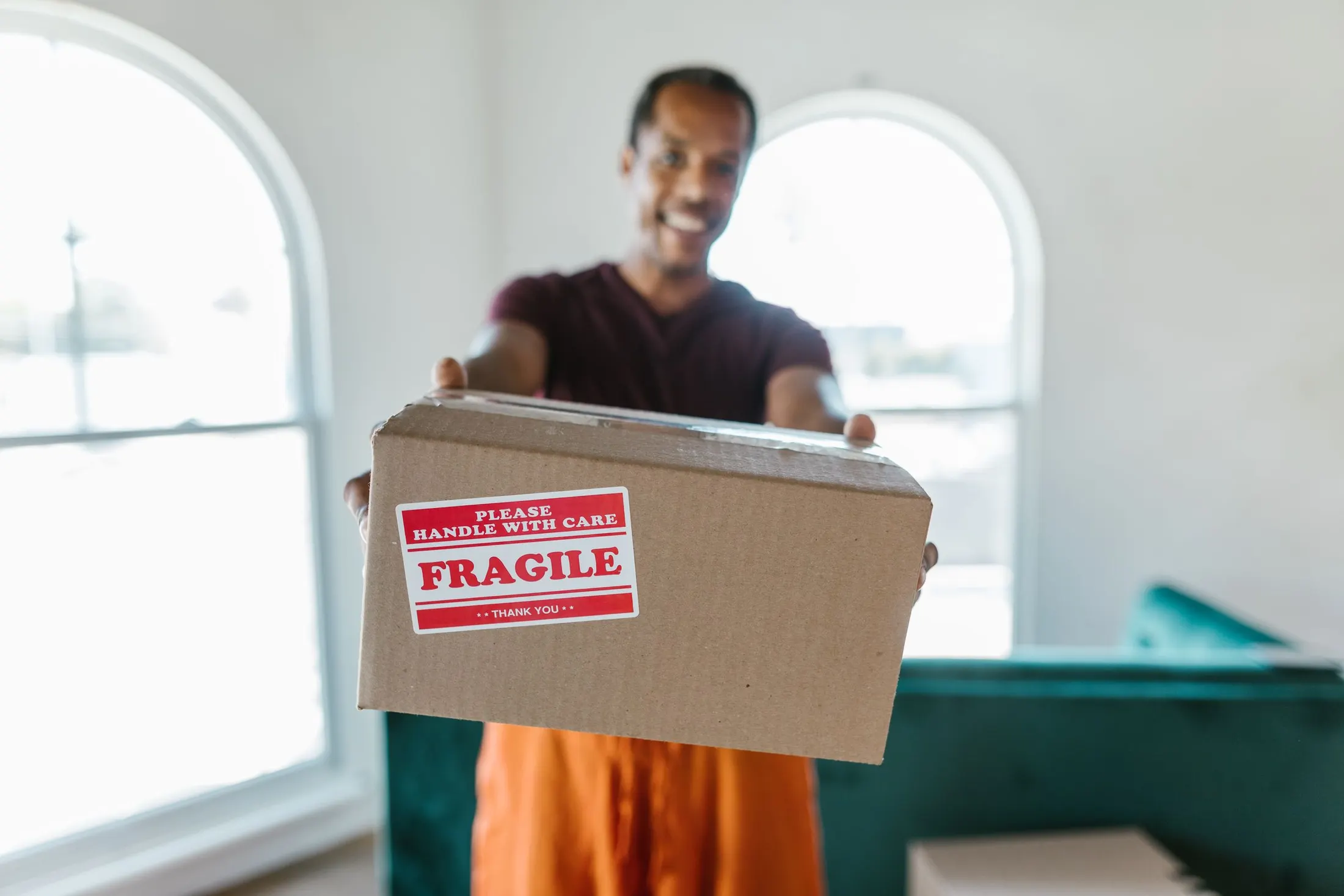
Write “FRAGILE — THIS WAY UP” on two sides, plus the destination room. Marking one side only means the label will face a wall when it matters.
A quick test before you seal
Gently rock the closed box. If anything shifts inside, open it and add more filler. A correctly packed fragile box feels like a solid object.
What should never go in a moving box
Some things are not worth the risk, however well wrapped. Keep them out of the load entirely:
- Documents, passports, certificates and cash.
- Medication, glasses and keys.
- Liquids that can leak — cleaning products, opened bottles, paint.
- Flammable and pressurised items: gas canisters, aerosols, fuel.
- Anything irreplaceable that fits in a bag you can carry.
Packing a kitchen in the right order
The kitchen has the most fragile items and the most weight, so it rewards a sequence. Start with the items you use least — serving dishes, seasonal cookware — then work towards the daily plates and mugs on the final morning. Pack glasses standing upright in a dish barrel with cardboard dividers, and wrap plates in stacks of four with paper between each one.
Knives travel separately: wrap each blade, tape it to a piece of cardboard, and label the bundle clearly. Cutlery trays can be wrapped whole with the contents still inside.
The last box in the kitchen
Leave one box open until the morning: kettle, two mugs, tea, a cloth, a bin bag and a sharp knife. It is the first thing you will want in the new place, and the one thing nobody remembers to pack separately.
If something does break
Unpack the damaged item where you found it and photograph it in the box, with the wrapping still around it. Do not throw the packaging away — it is the evidence the claim depends on. Report it to your mover the same day, in writing, with the box label and the inventory entry. Most problems are resolved quickly when the report arrives early; almost none are resolved when it arrives after the boxes are gone.
If glassware and a full kitchen are more than you want to take on, our professional packing service brings the cartons and dividers and packs fragile rooms first, so the kitchen is closed and labelled in an afternoon.